

Eczema Isn't Just a Skin Problem - Here's What Your Body Might Be Asking For
By Hannah Rayner, Registered Nutritional Therapy Practitioner (BANT, CNHC)
If you live with eczema or atopic dermatitis, you probably know how relentless this skin condition can feel.
The itching that keeps you awake.
The redness that flares just as you're starting to feel better.
The frustration of doing "all the right things" - yet your skin still won't settle.
And perhaps most exhausting of all? Not knowing why your skin becomes so reactive or what triggers each flare-up.
Eczema affects up to 1 in 10 adults in the UK (and affects more than 31 million people in the US), yet many people with eczema are still offered solutions that focus only on the surface of the skin. Topical creams, steroid treatments, temporary fixes - often without any real explanation or long-term eczema management plan.
But eczema isn't random. And it isn't just a skin issue.
As a Registered Nutritional Therapist specialising in skin and gut health, and someone who has lived with eczema herself, I work with people every day who feel confused, frustrated and worn down by their skin. But when we take an evidence-based nutritional therapy approach, eczema often starts to make much more sense.
What's Really Going On in Eczema?
Understanding Atopic Dermatitis and How It Affects Your Skin
Eczema (also known as atopic or contact dermatitis) is a chronic inflammatory condition. It develops when the skin's protective barrier isn't functioning as well as it should.
In healthy skin, cells are tightly packed together, supported by fats and oils that lock moisture in and irritants out.
In eczema-prone skin:
- Tiny gaps form between skin cells
- Moisture escapes more easily
- Irritants, allergens and microbes slip in
- The immune system goes into overdrive
This is why people with eczema experience dry, reactive, itchy skin and inflammation - and why eczema flares often appear "out of nowhere".
Hot or dry weather, stress levels, allergens, certain foods, hormones or illness can all act as environmental triggers for eczema symptoms. And many people with eczema also have a history of hay fever, asthma or other conditions where the immune system overreacts.
Which brings us to something important...
Why Treating the Skin Alone Often Isn't Enough
Understanding Different Treatment Options for Eczema
Conventional treatment options for managing eczema usually focus on:
- Suppressing inflammation
- Calming immune responses
- Creating an artificial skin barrier
These approaches can be helpful in the short term - and sometimes necessary, especially when symptoms get worse - but they rarely address the root causes.
From a nutritional therapy perspective, this chronic skin condition is often a sign that the immune system, digestion and skin barrier function are under strain - not that the skin itself is "failing".
Rather than simply calming eczema symptoms with topical treatments, this holistic approach looks at what is driving inflammation and immune reactivity inside the body, using nutrition, lifestyle and targeted supplementation to support balance over time.
The Gut-Skin Connection: A Holistic Approach to Treating Eczema
Your gut and your skin are closely connected.
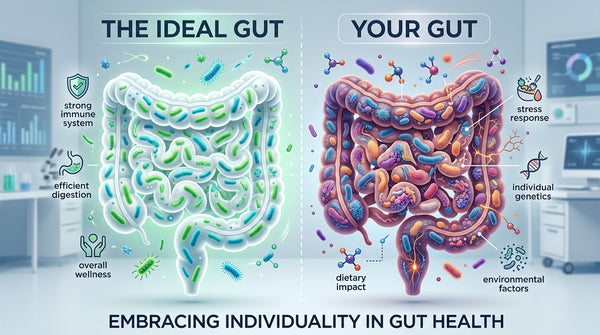
Around 70-80% of your immune system lives in your gut, alongside trillions of bacteria that help regulate inflammation, immune tolerance and barrier integrity.
When gut health is compromised - through stress, antibiotics, infections, ultra-processed foods or long-term inflammation - several things can happen:
- Immune responses become exaggerated
- Inflammatory signals increase
- The gut lining becomes more permeable
- The body struggles to eliminate waste efficiently
When this happens, sensitive skin often reflects that internal imbalance through inflammation, itching and eczema flares.
This is why supporting gut health is a cornerstone of nutritional therapy for people's eczema and other inflammatory skin conditions.
Gentle, evidence-based gut support
A well-chosen probiotic can help support a healthy gut microbiome and balanced immune function - particularly when used consistently.
I really like NUYU Gut Biotic+ (19 Billion CFU). It is a supportive option for people with sensitive digestion:
- A researched blend of beneficial bacteria to support gut and immune health
- Small, easy-to-swallow capsules (often a big relief for people who struggle with supplements)
- Designed for daily, steady support rather than aggressive approaches
Your Skin Has Its Own Microbiome
Just like your gut, your skin hosts its own community of bacteria.
Research shows that the skin microbiome in people with eczema and other skin conditions like psoriasis differs from that of people with healthy skin - and that certain bacterial strains increase during flare-ups.
What's particularly interesting is that gut bacteria influence skin bacteria, reinforcing the importance of internal support when working with chronic skin conditions rather than relying solely on topical corticosteroid treatments.
Inflammation, Fats & the Skin Barrier
How Omega-3s Can Help Make Eczema Better
Chronic, low-grade inflammation plays a central role in eczema and can affect your skin's ability to heal - and diet has a powerful influence here.
Omega-3 fatty acids are particularly important for:
- Supporting healthy inflammatory responses
- Helping regulate immune activity
- Strengthening the skin barrier function
- Improving skin softness, hydration and resilience
Many people don't consume enough omega-3s through diet alone, especially if oily fish is limited. So I often recommend a supplement. NUYU Omega-3 Softgels provide:
- A high-quality source of omega-3 fatty acids
- Support for skin health and inflammation balance
- Small, easy-to-swallow capsules that are practical for daily use
For many people diagnosed with eczema, omega-3s become a quiet but essential part of calming reactive, sensitive skin over time and helping eczema better manage flare-ups.
The Liver–Skin Relationship
Your liver plays an important role in processing hormones, environmental toxins and metabolic waste.
If these pathways are under pressure - due to stress, medications, alcohol or digestive issues - your skin becomes an alternative route of elimination, increasing the likelihood of inflammation and making eczema worse.
In nutritional therapy, liver support is approached gently and practically, often through:
- Nutrient-dense foods
- Adequate protein and fibre
- Supporting digestion and regular bowel movements
In some cases, specific herbs such as milk thistle, artichoke or dandelion may also be used under professional guidance.
Nutrients & Food Sensitivities That Can Affect the Skin
Nutritional Support for Different Types of Eczema
Skin cells renew rapidly and require a consistent supply of nutrients to stay healthy.
Nutrients commonly linked with treating eczema naturally and supporting good skin health include:
- Vitamin A (found in liver, eggs, dairy, carrots)
- Vitamin D (found in oily fish, some mushrooms, and sunlight!)
- Zinc (found in shellfish, meat, wholegrains)
- Essential fatty acids (found in oily fish, nuts, seeds)
Many people also notice eczema symptoms and flare-ups linked to certain foods - commonly dairy, wheat, eggs or soya. These reactions are often sensitivities rather than true allergies, and can be influenced by gut barrier integrity and immune balance. These can irritate the gut and cause your skin to react.
Working with a healthcare professional or nutritional therapist, it's possible to explore this more clearly using comprehensive food sensitivity testing, which can assess reactions to up to 200 different foods. This can be incredibly helpful in removing guesswork - allowing you to understand which foods your immune system is genuinely reacting to, rather than avoiding foods unnecessarily.
Supporting Eczema From the Inside Out
Natural Ways to Manage Eczema and Address the Root Causes
Managing eczema isn't about perfection - it's about understanding your skin and understanding the signs of eczema in your body.
Your skin is giving you information.
With the right nourishment and guidance, you can respond with care.
An evidence-based, holistic approach to eczema treatment may include:
- Identifying individual triggers (food, stress levels, environmental triggers, skincare products that may irritate sensitive skin)
- Supporting gut and immune health
- Addressing nutrient insufficiencies
- Reducing overall inflammatory load
- Choosing supplements and natural treatment options that are gentle, effective and realistic for people with eczema to take daily
Most importantly, it's about working with the body rather than against it.
Nourish the body well with good skin care from the inside out, and the skin is often able to soften, stabilise and reduce the effect of eczema on daily life.
Whether you have contact dermatitis, atopic dermatitis, or other types of eczema, remember that eczema can affect people differently. What shows as red patches on light skin may look different on dark skin, appearing as brown or gray patches. If you're struggling with an itchy eczema rash or itchy patches that won't improve, consider consulting your GP, doctor or dermatologist alongside exploring these holistic approaches. Understanding your skin condition is the first step toward finding the right ways to manage it for your unique body.
Follow Hannah - https://www.instagram.com/better_skin_nutrition/
References
- Atopic dermatitis epidemiology and unmet need in the United Kingdom – PubMed (nih.gov)
- Effect of 8 weeks milk thistle (silymarin extract) supplementation on fatty liver disease – PMC (nih.gov)
- Effects of artichoke supplementation on liver enzymes: A systematic review and meta-analysis of randomised controlled trials – PMC (nih.gov)
- In vitro and in vivo hepatoprotective effects of Taraxacum officinale (dandelion) root extract – PubMed (nih.gov)
- Vitamin D and the development of atopic eczema – PubMed (nih.gov)
- Effects of zinc supplementation on inflammatory skin diseases: A systematic review of clinical evidence – PubMed (nih.gov)
- Docosahexaenoic acid (DHA) supplementation in atopic eczema: A randomised, double-blind, controlled trial – British Journal of Dermatology
- Omega-3 fatty acids and inflammation – PMC (nih.gov)
- Supplementation of flaxseed oil diminishes skin sensitivity and improves skin barrier function – PubMed (nih.gov)
- Temporal shifts in the skin microbiome associated with disease flares and treatment in children with atopic dermatitis – PubMed (nih.gov)
- The gut–skin axis in health and disease – PubMed (nih.gov)
- Probiotics for the treatment of atopic dermatitis: A systematic review and meta-analysis – PubMed (nih.gov)
- Intestinal permeability in patients with atopic dermatitis – PubMed (nih.gov)
- Dietary patterns, inflammation and skin disease – PubMed (nih.gov)
- Effects of omega-3 fatty acids on skin barrier function – PubMed (nih.gov)
- Food sensitisation and atopic dermatitis: Association and clinical relevance – PubMed (nih.gov)